Working From Home Tax Deductions: What You Can Actually Claim
A clear guide to claiming work-from-home expenses on your tax return, including the two methods available and the records you need to keep.
ATA Accountants Team
21 July 20266 min read
Working from home, even part of the week, opens up a genuine set of tax deductions — but it's also one of the areas the ATO scrutinises most closely, precisely because it's so commonly claimed and so commonly claimed incorrectly. Understanding the two available methods, and what each actually covers, makes the difference between a confident, defensible claim and one that raises questions.
The two methods available
The ATO offers two ways to calculate working-from-home deductions, and you choose whichever produces a better, more accurate outcome for your situation — you don't need to stick with the same method every year.
**The fixed rate method** applies a set rate per hour worked from home, intended to cover the additional running costs of working from home — electricity, gas, internet, phone, and the decline in value of office equipment like computers and chairs. This method is simpler to calculate but requires a record of the actual hours worked from home across the year, not just an estimate.
**The actual cost method** involves working out the precise additional cost of each individual expense — calculating the work-related proportion of electricity and gas based on actual usage, depreciating equipment individually, and so on. This method can produce a larger deduction for people with substantial home office costs, but it requires considerably more detailed record-keeping to support every component of the claim.
What the fixed rate method actually covers
It's a common misunderstanding that the fixed rate covers everything related to working from home. It doesn't. The rate is specifically designed to cover energy costs, internet, phone, and consumables like stationery. It does **not** cover the decline in value of larger equipment (laptops, monitors, office furniture) or occupancy costs (rent, mortgage interest, council rates) — these need to be claimed separately, using the actual cost method, if you're eligible to claim them at all.
Occupancy costs: the area most people get wrong
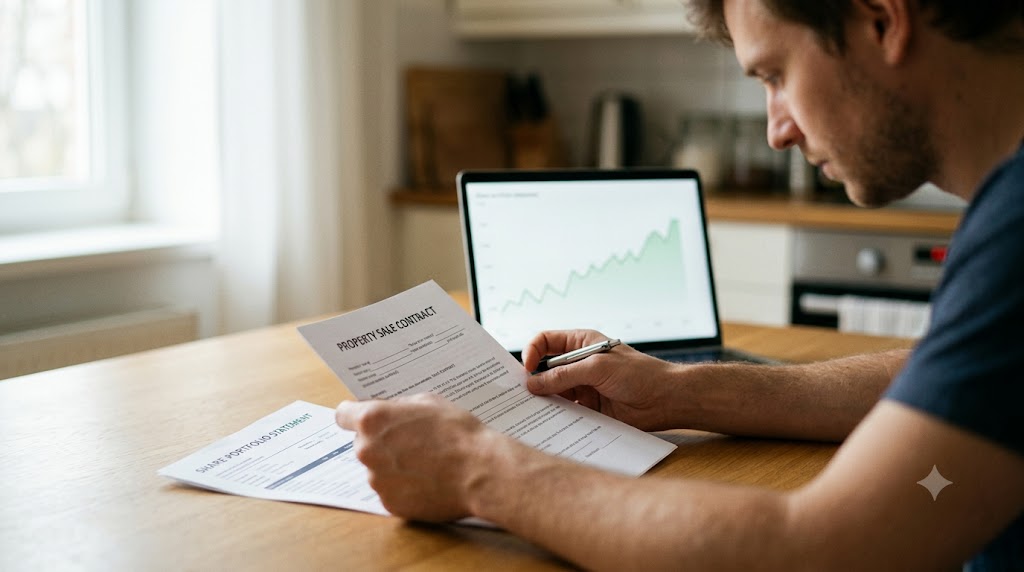
This is genuinely one of the most consequential mistakes people make with home office deductions. Occupancy costs — a portion of rent, mortgage interest, council rates, and home insurance — are only deductible if your home is genuinely being used as a place of business, not simply somewhere you happen to do some work. For most employees working from home as an arrangement with their employer, this threshold isn't met, and claiming occupancy costs incorrectly can also have a significant downstream consequence: it can affect the main residence exemption from capital gains tax when the property is eventually sold, potentially creating a tax liability that wasn't anticipated. This is an area worth getting advice on before claiming, not after.
Records you actually need to keep
Regardless of which method is used, the ATO expects genuine, contemporaneous records — not an estimate reconstructed at tax time. For the fixed rate method, this means keeping a record of the actual hours worked from home throughout the year (a diary, timesheet, or roster is acceptable; a single estimated figure for the whole year generally isn't). For the actual cost method, it means retaining bills, receipts, and a reasonable basis for calculating the work-related proportion of each expense, such as a log of usage patterns for several representative weeks if a full year of detailed tracking isn't practical.
What can't be claimed
A few common misconceptions worth clearing up directly: general household items like coffee, toilet paper, and other everyday consumables aren't deductible, even though they get used while working from home. Costs that would be incurred regardless of working from home — such as a mortgage payment on a home you'd own and live in either way — aren't deductible under the fixed rate method, and only partially deductible under the actual cost method if occupancy costs genuinely apply. And expenses already reimbursed by an employer can't also be claimed as a personal deduction — that would amount to claiming the same cost twice.
Equipment depreciation
Larger items used for work — a laptop, monitor, office chair, or desk — can generally be depreciated over their effective life if used for work purposes, with the deduction apportioned for any private use. Items under a certain value threshold may be eligible for an immediate deduction rather than depreciation over multiple years; this threshold is reviewed periodically, so it's worth checking the current figure rather than assuming a prior year's threshold still applies.
A mixed-use household complicates things
Many home offices aren't a single, exclusively dedicated room — they're a corner of a living area, a kitchen table, or a space shared with other household activities. This doesn't disqualify a working-from-home claim, but it does mean the calculation needs to reasonably reflect actual work use rather than treating the whole space as 100% work-related. Overstating the proportion of a shared space used for work is one of the more common, and more easily detected, errors in this category of claim.
Why this is worth getting properly right
Working-from-home claims sit at an interesting intersection: they're genuinely common, broadly understood by the ATO to be legitimate, and yet frequently claimed with optimistic rounding rather than accurate records. Because so many taxpayers claim this deduction, it's also a category the ATO actively reviews using data-matching and benchmarking against typical claims for similar occupations and circumstances. A well-documented, accurately calculated claim is straightforward; a rounded, undocumented estimate is one of the more common reasons a return gets flagged for further review.
How ATA Accountants can help
We help individuals work out which method actually produces the better outcome for their specific circumstances, and make sure whichever method is used is properly documented and defensible — not just a rounded guess carried over from last year.
**Book an appointment** to make sure your working-from-home claim is accurate and properly supported.
Enjoyed this? Get practical tax tips like this in your inbox.
Occasional articles on tax, compliance, and planning — plain English, no fluff.
Need advice on your own situation?
General articles only go so far. Book an appointment for advice tailored to you.
Book an appointment